Who Owns Starlight? The Legal Black Hole at the Heart of the Dyson Swarm
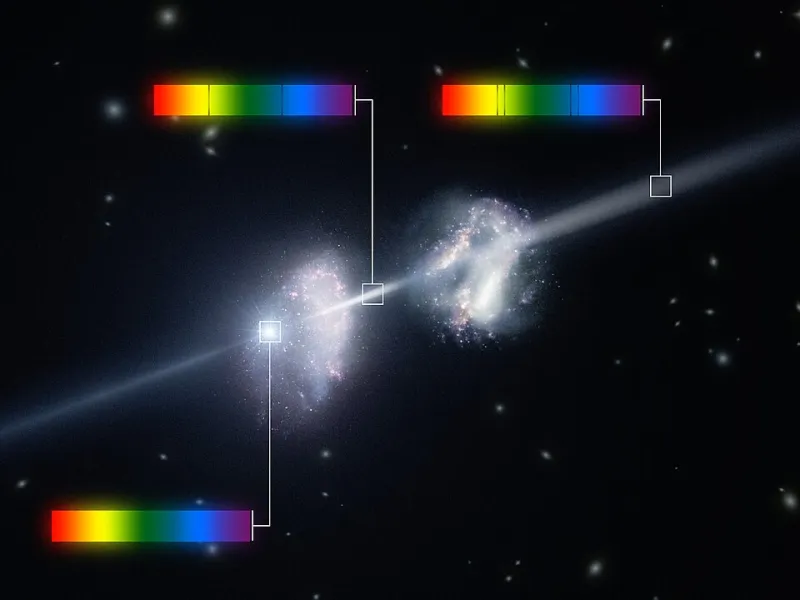
Photo: ESO/L. Calçada, CC BY 4.0, via Wikimedia Commons
Let's say humanity gets serious about its energy future — not serious like rooftop panels and tax credits, but serious. Serious like dismantling a planet.
The Dyson swarm, the modern descendant of Freeman Dyson's 1960 thought experiment, envisions not a solid shell but billions of independent solar collectors orbiting the Sun, harvesting a meaningful slice of its 3.8 x 10^26 watts of output. It's the ultimate energy play. It's also, technically, an act of planetary demolition. And that's where the lawyers come in.
Why Mercury Is on the Menu
Building a swarm requires absurd quantities of material and an equally absurd amount of construction labor. Mercury keeps coming up in the literature for three reasons: it's close to the Sun (cheap solar energy for powering the buildout), it's dense in metals, and — uncomfortably — it has no ecosystem, no inhabitants, and no one currently filing injunctions on its behalf.
Physicist Stuart Armstrong and colleagues estimated that a self-replicating solar-powered factory chain could, in principle, disassemble Mercury in a few decades. The first factory builds copies of itself, those copies build more, and the exponential takes over. Within roughly 40 years, you'd have enough collectors to capture a substantial fraction of the Sun's output — a million times humanity's current energy budget.
The energy payback is almost comically favorable. A solar collector in Mercury's orbit receives about ten times the sunlight of one near Earth, and the swarm itself would repay its construction energy in months, not decades. The engineering roadmap is wild but not magic: known physics, extreme engineering.
Now, About That Treaty
Here's the snag. The 1967 Outer Space Treaty — the foundational document of space law, signed by every major spacefaring nation — says no nation may claim sovereignty over celestial bodies. It also requires that space activities be conducted for "the benefit and in the interests of all countries."
Dismantling a planet to build an energy monopoly doesn't exactly read like a benefits-sharing arrangement.
Consider the questions a swarm raises:
-
Who owns Mercury? Nobody can claim it, but who may use it? The OST is silent on wholesale extraction at planetary scale.
-
Who owns the energy? Sunlight isn't a celestial body. A swarm between the Sun and Earth would intercept energy that would otherwise arrive unclaimed — arguably altering a shared resource without consent.
-
Who's liable? If a swarm element fails and deorbits onto Mars, or if construction debris contaminates another body, the Liability Convention of 1972 assigns fault to the launching state. Good luck attributing a trillion-node constellation.
-
Who decides? The Moon Agreement of 1979 tried to declare space resources the "common heritage of mankind," but the US, Russia, and China never ratified it. The 2015 US Commercial Space Launch Competitiveness Act and the 2020 Artemis Accords went the other way, asserting rights to extracted resources. The legal ground is contested, patchy, and written for asteroid mining — not planet demolition.
The Geopolitics of a Sunshade
The deeper dilemma isn't ownership of rocks — it's leverage. Whoever controls the swarm controls the energy budget of civilization. A single actor with that capability holds power no empire has ever had: the ability to beam energy to allies, withhold it from rivals, or even — intentionally or not — alter the light reaching other planets.
That's not a market. That's a monopoly on starlight. Expect every nation on Earth to have opinions, and expect the opinions to be delivered with missiles rather than briefs.
A Softer Path?
Realistic roadmaps probably skip Mercury entirely, at least at first. A modest swarm — Mercury-independent, built from asteroid material, capturing perhaps 0.01% of solar output — could be built by a coalition rather than a conqueror, under a new international framework that doesn't yet exist. Think of it as the Outer Space Treaty's awkward grandchild: negotiated in a world that suddenly cares very much about energy governance.
The honest answer to "could we do it without ending up in a courtroom?" is that the courtroom doesn't exist yet. Someone would have to build the law the way they'd build the factory — exponentially, and fast.
Until then, the Sun shines on everyone, free of charge. Enjoy it while nobody's metering it.

