The Roof That Runs the Block: America's 2030 Solar Thought Experiment
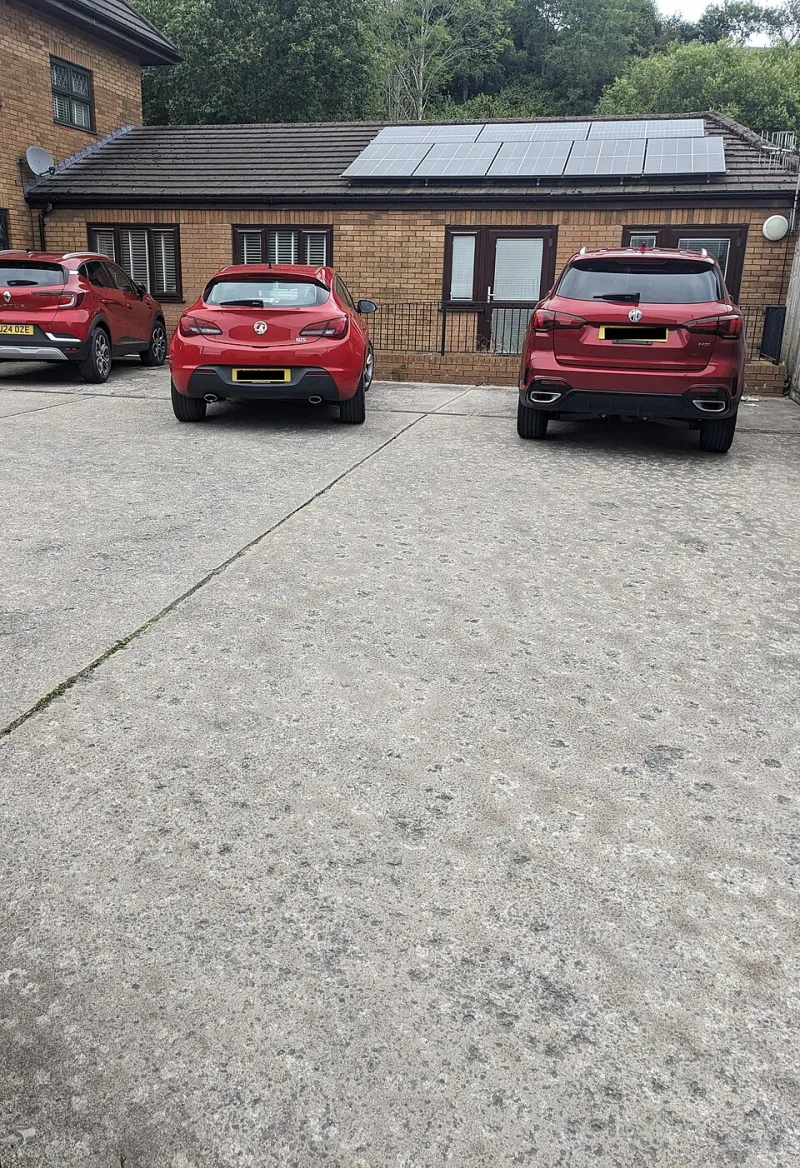
Photo: Jaggery , CC BY-SA 2.0, via Wikimedia Commons
Imagine waking up in 2030 in a midsize American city where the roof over your head is also a tiny power company. The panels are not a statement. They are as unremarkable as the water heater in the basement. A standardized permit took minutes, the installer used a federally recognized design, and the local grid operator can call on your battery during a heat wave. That is the Rooftop Republic: not a utopia, just a country where distributed solar became boring infrastructure.
This is a thought experiment, not a forecast. As of 2026, the pieces exist but do not quite fit. Permitting is still a patchwork. Storage is cheaper than it used to be but not free. Virtual power plants are real in places like Texas and California, yet they are often pilots rather than mainstream grid assets. The question is what happens if the fit improves by 2030.
The 2030 snapshot
In this scenario, three things go right. First, permitting standardizes. A national model code, adopted by most states, lets installers submit a single digital package. Second, storage gets cheap enough that a home battery is an appliance, not a luxury. Third, utilities and regulators accept virtual power plants as dispatchable resources, paying homeowners for capacity and services.
The result is not every roof. Apartment buildings, shaded homes, and historic districts still need alternatives. But the functional goal -- solar access for most households -- becomes plausible. Community solar fills gaps. A renter in a Chicago three-flat can subscribe to a shared array and see a credit on the bill.
Grid reliability gets weirder
A rooftop-heavy grid is not automatically more reliable. It is differently reliable. On a sunny spring day, distribution circuits can see voltage swings as solar output ramps. At dusk, batteries and flexible demand have to pick up the slack. The grid operator's job shifts from managing a few large power plants to coordinating millions of small ones.
That can be good. A neighborhood with rooftop solar and batteries can island during a storm, keeping the lights on for a few blocks. Virtual power plants can shave peak demand and defer expensive substation upgrades. But it also demands better sensing, faster communications, and clear rules for who controls the battery when.
The darker version is a patchwork of private systems that optimize for individual homes while leaving the distribution grid blind. That is why the Rooftop Republic scenario hinges on standards: open protocols, cyber rules, and utility visibility.
Utilities become traffic cops
Utilities do not disappear. Their business model changes. If customers generate and store more of their own power, the old model of selling kilowatt-hours at a fixed rate gets squeezed. Regulators then have to answer a thorny question: who pays for the poles, wires, and wildfire hardening that everyone still needs?
In the thought experiment, utilities become distribution platform managers. They earn revenue for reliability, hosting capacity, and coordinating distributed resources. Some run their own virtual power plants. Others are forced to compete with third-party aggregators. The fight is less about sunbeams than about who gets paid for flexibility.
This is already visible in miniature. Utilities in several states have pushed back on rooftop solar compensation while also launching battery programs. By 2030, the argument could mature into something more pragmatic: pay distributed resources for the services they actually provide, and stop pretending every kilowatt-hour is equal.
Insurance learns to price a power plant
Home insurance is the boring bottleneck nobody budgets for. A rooftop solar system plus a battery is a capital asset, a fire risk question, and a liability question. In a rooftop-heavy America, insurers would need standardized data on installation quality, battery chemistry, and maintenance. Premiums could fall for homes that provide grid services, or rise if claims data goes bad.
There is also the contractor problem. A gold rush invites fly-by-night installers. The scenario only works if licensing, inspections, and warranties are robust. Otherwise, the Rooftop Republic becomes a repair bill.
Equity is the hard part
Solar has a stubborn access problem. Homeowners with good credit and shaded-free roofs adopt first. Renters, low-income households, and people in older buildings often wait. A 2030 scenario that ignores this produces a two-tier grid: one group with backup power and lower bills, another with neither.
Community solar is the obvious patch, but it needs real mandates and honest billing. On-site solar for multifamily buildings needs different financing. And utility programs that pay for battery capacity should not quietly exclude the households that need the money most.
What could still break
The dream could stall on rooftop permitting, interconnection queues, and insurance. It could also stall on labor. Installing millions of systems requires electricians, roofers, and inspectors, and the country already has shortages in the trades.
The Rooftop Republic is not a technical fantasy. It is an administrative one. The sun is free; the paperwork is not. If the United States treats distributed solar as ordinary infrastructure -- with standard rules, open data, and fair compensation -- 2030 could look surprisingly boring. That would be the point.