Rails on Regolith: Could a Solar Train Make the Moon a Working Site?

Photo by Photo by Albert Canite on Unsplash on Unsplash
A lunar railroad sounds like something from a 1950s pulp cover: sleek capsule, bubble helmet, track stretching toward the horizon. The modern version is less glamorous and more interesting. NASA and its partners want to establish a sustained presence near the Moon's south pole, where ice may hide in permanently shadowed craters and some ridge tops get nearly continuous sunlight. To turn that into a working base, someone has to move regolith, ice, and equipment across a landscape with no roads, no atmosphere, and two-week nights.
Why Rails on the Moon?
Rovers are flexible. They can explore, sample, and reroute. But they are slow, and their payloads are limited. If a base needs to move hundreds of tons of regolith to a processing plant, or haul ice from a dark crater to a sunlit habitat, a fixed rail line starts to look less like a theme-park ride and more like infrastructure. Steel wheels on a prepared track can carry heavy loads with low rolling resistance. In lunar gravity, the energy math is friendly, even if the engineering is not.
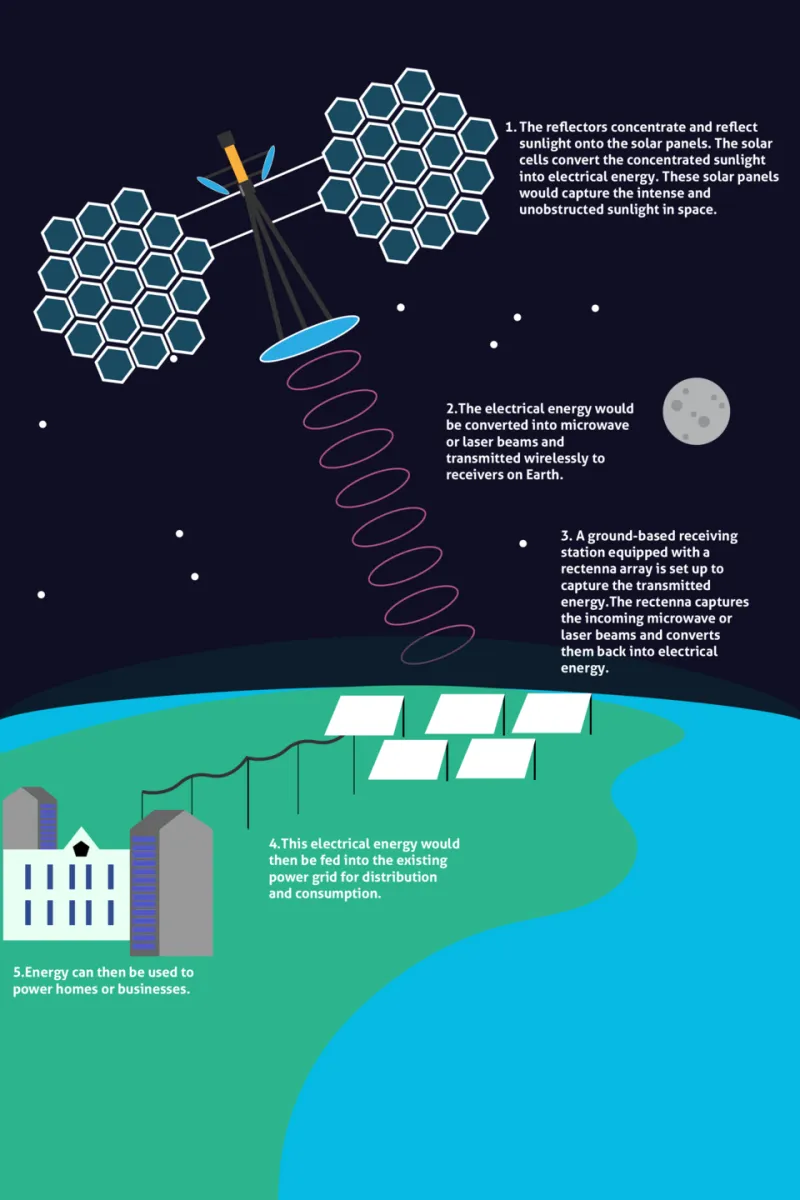
A solar railroad would likely be a short industrial spur, not a trans-lunar express. Think a few kilometers of track connecting an ice-bearing crater to a processing site, with solar arrays on a nearby ridge and a battery or fuel-cell bank to keep the system alive through the night. The rail could carry regolith for sintering, ice for water and propellant, and equipment between landing zones and habitats.
The Two-Week Night Problem
The Moon rotates once every 27 Earth days, so most surface locations get about 14 days of sunlight followed by 14 days of darkness. The south pole softens that extreme: some peaks are illuminated most of the time, while crater floors never see the sun. A solar railroad would have to be designed around that split. Arrays on a sunlit ridge could charge batteries or run electrolyzers. The track itself might be largely in shadow, which is good for ice preservation and bad for solar power.
Energy storage becomes the defining cost. Lithium batteries are heavy to launch and may not like deep cold. Regenerative fuel cells could store energy for long durations, but they add complexity. NASA has also studied fission surface power for lunar bases, and a solar railroad might end up as a hybrid—solar for daylight operations, nuclear or fuel cells for the long night. The policy question is whether NASA should fund a rail line, a power grid, or both.
Building Tracks Without a Home Depot
Lunar construction is a logistics nightmare. Every kilogram from Earth is expensive, so engineers want to use regolith. One idea is to sinter or melt lunar soil into solid tiles or a roadbed. Another is to build a simple raised track from imported aluminum or composite parts, anchored into the surface. Robots could grade the route, but the Moon does not make grading easy. Dust is jagged, abrasive, and electrostatically clingy. It can jam joints, coat solar panels, and wear through seals.
A rail line would need dust mitigation: covers, brushes, magnetic seals, or electrostatic repellers. It would also face thermal expansion and contraction, micrometeorite strikes, and the challenge of keeping a track aligned across a landscape that may shift with temperature. None of this is impossible. It is just expensive, and it argues for starting small.
The Policy Track: Who Pays and Who Governs?
A lunar railroad is not just an engineering project. It is a statement about who plans to stay on the Moon and under what rules. NASA's Artemis program relies on international partners and commercial landers. A rail line could be a government-built piece of infrastructure, a commercial service, or a public-private partnership. Each model has different incentives.
Then there is the legal question. The Outer Space Treaty prohibits national sovereignty claims, but it does not settle how resource extraction or surface infrastructure should be managed. The Artemis Accords aim to fill some of that gap with principles like transparency and interoperability. A rail line crossing a resource-rich crater would test those principles in practice. Who gets right-of-way? Who maintains the track? Who pays for search and rescue if a train breaks down in the dark?
A Realistic First Version
The first lunar railroad probably will not be a railroad in the classic sense. It may be a conveyor system, a cable-hauled sled, or a short track built to prove that heavy transport works in lunar conditions. If that succeeds, the idea could scale into a network that moves material from mining sites to processing plants. The solar part is attractive because the Moon has no clouds, no atmosphere, and no permitting fights over viewsheds. The night is the hard part.
A solar railroad would not make moon mining easy. It would make it more like infrastructure: capital-intensive, boring, and essential. That may be the most science-fictional thing about it.